Automotive rubber parts are an indispensable component of modern automotive manufacturing, widely used in critical systems such as sealing, shock absorption, transmission, and protection.These parts, with rubber as their core material, utilize scientific formulations and precision processing to ensure safety, comfort, and durability in complex vehicle operating conditions. This article systematically introduces the technical content and application value of automotive rubber parts, focusing on material properties, major types, functions, and development trends.
Material Properties and Technical Requirements
The core material of automotive rubber parts is typically synthetic rubber (such as nitrile rubber, chloroprene rubber, silicone rubber, and fluororubber) or natural rubber, with the choice of material depending on the performance requirements of the specific application. Rubber materials must possess the following key properties:
1. Elasticity and flexibility: Ensures effective energy absorption and restoration under dynamic conditions (such as vibration and impact);
2. Weather resistance and chemical stability: Resists corrosion from high temperatures, ozone, oil, and acidic and alkaline environments, extending service life;
3. Sealing: High-precision molding processes enable micron-level sealing to prevent liquid or gas leakage;
4. Wear and tear resistance: Maintains structural integrity under long-term friction or mechanical stress.
In addition, to meet automotive lightweighting and environmental requirements, modern rubber parts often utilize nano-modification and fiber reinforcement to optimize overall performance.
Main Types and Applications
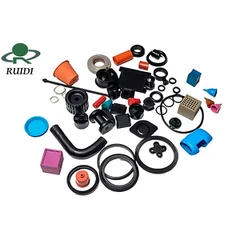
Automotive rubber parts can be divided into the following categories based on their function:
1. Sealing Parts
These include engine oil seals, cylinder head gaskets, and door/window seals, primarily used to prevent leakage of engine oil, coolant, air, and dust. For example, window seals made of EPDM rubber offer both weather resistance and low compression set, ensuring excellent sound insulation and waterproofing even after long-term use.
2. Vibration-absorbing accessories
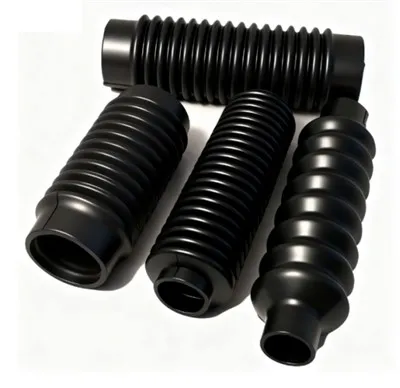
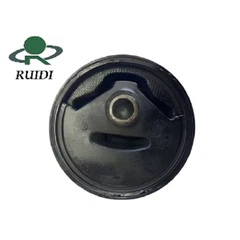
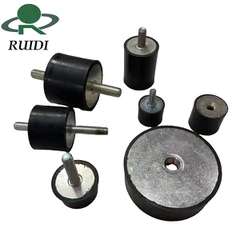
Such as suspension bushings, engine mounts, and drive shaft dust covers, these components attenuate vibration and noise through the rubber's damping properties. Silicone rubber, due to its wide temperature range (-50°C to 200°C), is commonly used in vibration-absorbing components in high-performance vehicles.
3. Transmission and connection accessories
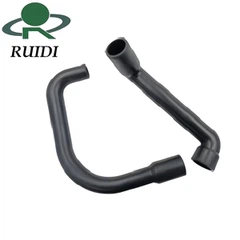
Such as timing belts, hoses (fuel lines, brake lines), and dust seals, they perform power transmission or fluid transport functions. Hydrogenated nitrile rubber (HNBR) is a preferred material for high-pressure fuel lines due to its outstanding oil and high-temperature resistance.
4. Protective and decorative accessories
Such as anti-slip floor mats, anti-collision guards, and insulating sleeves, they enhance driving safety and improve the aesthetics of the vehicle interior. These accessories are typically made of composite rubber materials, which combine flexibility and easy cleaning.
Industry Development Trends
As the automotive industry transitions toward electrification, intelligence, and green driving, rubber parts and components face new technological challenges and opportunities:
•New Material Development: Innovative materials such as bio-based rubber and self-healing rubber are increasingly being used in high-end vehicles;
•Smart Manufacturing: 3D-printed molds and digital molding processes improve production efficiency and product consistency;
•Lightweight Design: Reducing vehicle energy consumption through structural optimization and low-density material substitution;
•Environmental Compliance: Halogen-free and low-VOC (volatile organic compound) formulations are becoming mainstream to meet global emissions regulations.
Although often considered "invisible components," automotive rubber parts and components are the cornerstone of reliable vehicle systems. From traditional fuel vehicles to new energy vehicles, technological advancements have been closely linked to the advancement of the automotive industry. In the future, with breakthroughs in materials science and manufacturing processes, rubber parts and components will continue to play an irreplaceable role in improving vehicle performance, safety, and user experience.