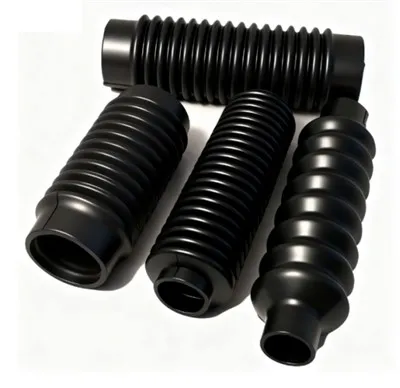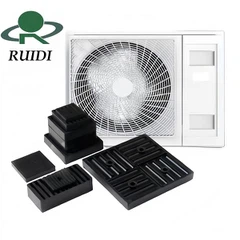
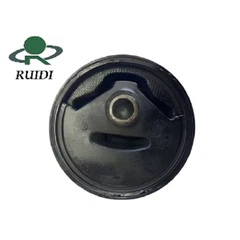
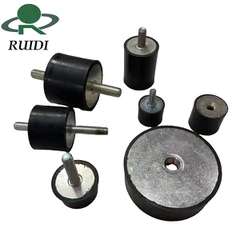
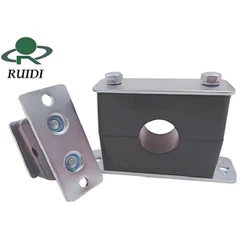
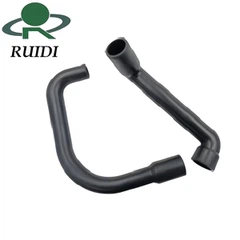
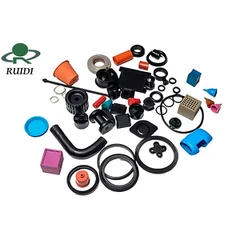
As an integral component in automotive manufacturing, the appearance of automotive rubber parts not only impacts product aesthetics but also directly impacts functionality, durability, and user experience.These parts are widely used in critical applications such as sealing, shock absorption, dustproofing, and waterproofing, including sealing strips, dust covers, rubber pads, and shock absorbers. Their appearance characteristics are primarily reflected in material texture, surface treatment, color consistency, shape accuracy, and overall structural integrity.
Material Texture and Touch
Automotive rubber parts are typically made of natural rubber, synthetic rubber (such as EPDM and silicone rubber), or rubber-plastic composites. Their surface texture varies depending on the material type. High-quality rubber products are soft and elastic, with a smooth and fine surface without noticeable graininess or rough areas. Some high-performance rubber parts may undergo special treatments, such as surface coatings or textured designs, to enhance wear resistance or anti-slip properties. For example, rubber shock absorbers in the engine compartment typically have a matte finish to reduce glare and enhance high-temperature resistance; door seals may feature a semi-gloss finish to ensure both sealing and visual harmony.
Surface Treatment and Process Marks
The surface treatment of rubber parts directly impacts their appearance. Common treatments include vulcanization, spray-on protective coating, and laser engraving. Vulcanized parts should have no visible burrs, bubbles, or uneven vulcanization, and should feature smooth edge transitions and no sharp protrusions. Some high-end automotive rubber parts are sprayed or dip-coated to enhance weather resistance (such as UV and ozone resistance). The coating on these parts should be uniform, without drooping or color variations. Furthermore, to facilitate assembly or brand identification, some rubber parts may be laser-engraved with the model number, production batch, or manufacturer's logo. These markings should be clear and regular, without blurring or missing parts.
Color Consistency and Decorative Properties
The color of automotive rubber parts must match the vehicle's interior or exterior design. Common colors include basic hues such as black, gray, and brown, while some decorative parts may feature multicolored or two-tone designs. High-quality rubber parts exhibit uniform color distribution, free of noticeable spots, fading, or oxidation. Color stability is particularly important for exterior rubber parts exposed to sunlight for extended periods, such as sunroof seals. Weathering tests are required to ensure they retain their original color even after extended use. Furthermore, some high-end models use special dyes or additives to impart decorative effects such as matte and pearlescent finishes to enhance the vehicle's overall appearance.
Form Accuracy and Structural Integrity
The form accuracy of rubber parts directly impacts their assembly performance and functionality. For example, door seals must fit tightly against the door frame, requiring precise and consistent cross-sectional shapes without deformation or dimensional deviation. O-rings require extremely high roundness to ensure a secure seal. Appearance-wise, these parts should be free of manufacturing defects such as distortion, missing adhesive, or flash, and joints should be smooth and free of misalignment. For rubber parts with complex structures (such as multi-cavity shock absorbers), their proportions must be balanced, with no areas that are too thin or too thick, to ensure uniform stress distribution and long service life.
The appearance of automotive rubber parts is a key indicator of their overall quality, encompassing multiple dimensions such as material texture, surface treatment, color consistency, and shape accuracy. These characteristics not only impact the functionality of the parts but also directly impact the user's visual and tactile experience. Therefore, during the automotive manufacturing process, the appearance quality control of rubber parts must strictly adhere to industry standards to ensure optimal aesthetics, durability, and fit.