

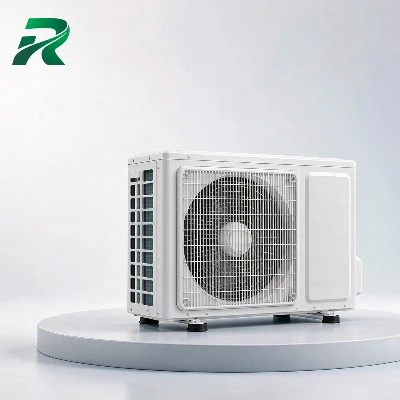
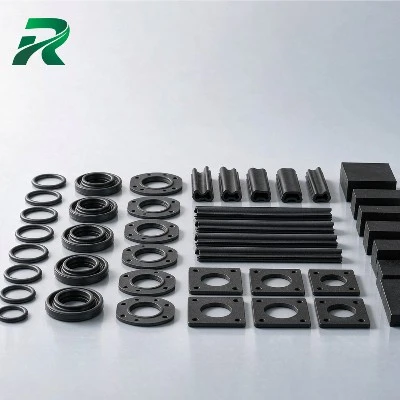
In modern air conditioning systems, rubber accessories, while seemingly insignificant, play a critical role in overall performance and reliability. These components, made from specialized rubber materials, leverage their unique physical and chemical properties to provide indispensable support for the stable operation of air conditioning systems.
Sealing performance is the core function of air conditioning rubber accessories. Components such as compressor shaft seals and pipe joint gaskets are made of materials such as nitrile rubber or fluororubber, effectively preventing refrigerant leakage. Experimental data shows that high-quality rubber seals can keep system leakage rates to less than 1% per year, which is crucial for maintaining cooling efficiency. Furthermore, the elastic compensating properties of rubber materials adapt to the thermal expansion and contraction of metal components, maintaining a reliable seal within an operating temperature range of -40°C to 200°C.
Vibration and noise reduction are primarily achieved through rubber shock absorbers and isolators. High-frequency vibrations generated by air conditioning compressors can reach over 200Hz. The composite structure of natural rubber and butadiene rubber absorbs over 80% of this mechanical vibration energy. This vibration-damping design not only reduces equipment noise but also reduces stress fatigue in piping caused by vibration transmission, thereby extending system life. Weather resistance is a special requirement for rubber components in outdoor air conditioning systems. EPDM rubber products used in rooftop units offer excellent ozone resistance and UV stability. Accelerated aging tests show that their tensile strength retention exceeds 75% of its initial value after ten years of use. This property ensures that rubber components maintain their original functionality even in extreme climates.
From a materials science perspective, modern air conditioning rubber components commonly utilize blending and modification technologies. By compounding functional fillers such as carbon black and silane coupling agents with base rubber, specific performance indicators can be targeted and enhanced. For example, rubber materials with graphite fillers can achieve a thermal conductivity of up to 1.5 W/(m·K), effectively improving the heat transfer efficiency of the condenser.
As air conditioning systems evolve towards higher efficiency and smaller dimensions, the functional requirements for rubber components continue to rise. The application of new hydrogenated nitrile rubber enables seals to maintain elasticity even under high-pressure conditions, while nanocomposite technology imparts enhanced wear resistance. These technological advances are driving air conditioning system reliability to new heights.


