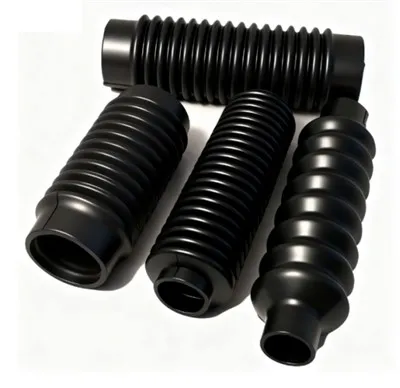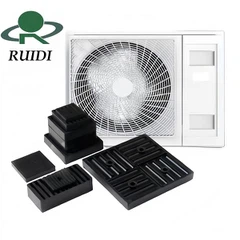
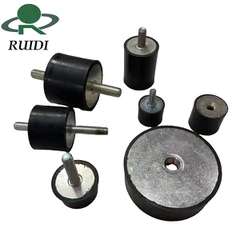
As an important industrial auxiliary material, rubber sheet gaskets play an irreplaceable role in modern production and daily life. Made primarily from natural or synthetic rubber through processes such as vulcanization and pressing, they possess excellent physical properties and chemical stability and are widely used in machinery manufacturing, construction engineering, transportation, and other fields. This article will discuss the technical characteristics, classification, and typical application scenarios of rubber sheet gaskets, aiming to provide a reference for related industries.
Technical Characteristics of Rubber Sheet Gaskets
The core advantage of rubber sheet gaskets lies in their unique material properties. First, rubber possesses high elasticity, capable of deforming when subjected to external forces and quickly returning to its original shape upon removal. This property makes them ideal for shock absorption and cushioning. For example, installing rubber sheet gaskets on the base of mechanical equipment can effectively reduce vibration transmission and extend the service life of the equipment.
Second, rubber sheet gaskets offer excellent wear and tear resistance. Synthetic rubbers (such as nitrile rubber and chloroprene rubber) can be further enhanced with improved oil resistance, high temperature resistance, or acid and alkali resistance through formulation optimization to meet the needs of diverse operating conditions. For example, nitrile rubber sheet gaskets are suitable for environments exposed to oily media, while fluororubber sheet gaskets remain stable under high temperatures (above 200°C) and highly corrosive conditions.
In addition, rubber sheet gaskets possess certain insulating properties and can be used for anti-static or insulation isolation in electrical equipment. Their moderate density and ease of processing also make them easy to customize in various thicknesses, sizes, and shapes to meet diverse engineering needs.
Classification and Application of Rubber Sheet Gaskets
Depending on the base material and intended use, rubber sheet gaskets can be divided into the following categories:
1.General-Purpose Rubber Sheet Gaskets
Mainly made of natural rubber or styrene-butadiene rubber, these are suitable for general industrial gaskets, anti-slip flooring, and other applications. While they are relatively low-cost, they offer limited resistance to specific media and are commonly used in light manufacturing and civilian applications.
2.Oil-Resistant Rubber Sheet Gaskets
Made of nitrile rubber, these gaskets are designed for environments exposed to oils such as lubricants and hydraulic oils. In the automotive repair and petrochemical industries, these sheet gaskets are used as sealing gaskets or pipe supports to effectively prevent oil leakage.
3.High-Temperature/Corrosion-Resistant Rubber Sheet Gaskets
Such materials as silicone rubber and fluororubber sheet gaskets can be used in extreme temperatures (-60°C to 300°C) or in strong acid and alkali environments. These materials are used as sealing gaskets or protective layers in harsh environments such as nuclear power and pharmaceutical applications.
4.Conductive/Anti-Static Rubber Sheet Gaskets
By adding carbon black or metal powder, rubber is rendered conductive. These materials are used in electronics factories, gas stations, and other locations where static electricity needs to be dissipated, preventing charge accumulation and potential safety hazards.
Development Trends and Selection Recommendations
With the advancement of industrial technology, rubber sheet gaskets are moving towards high-performance and environmentally friendly materials. For example, the development of recycled rubber and bio-based materials reduces carbon emissions, while nanocomposite technology further enhances the material's strength and functionality.
When selecting a sheet gasket, users should comprehensively consider operating conditions (such as load, temperature, and media), cost budget, and service life. It is recommended to prioritize sample performance testing and select products that comply with international standards (such as ASTM and GB/T) to ensure reliability.
While seemingly simple, rubber sheet mats are essential components across numerous industries. Their technological diversity and adaptability continue to drive improvements in industrial efficiency and safety. In the future, with advances in materials science, the application boundaries of rubber sheet mats will further expand, creating greater value for various industries.