

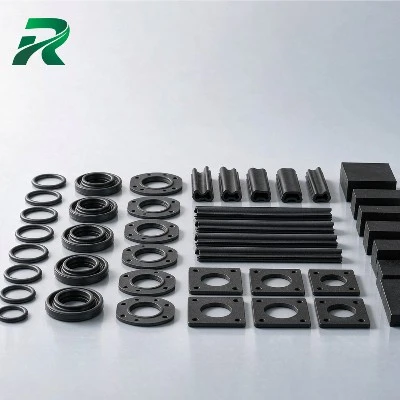
Industrial seals are crucial components in mechanical equipment, and their performance directly impacts the equipment's operating efficiency, safety, and service life.Proper seal selection, installation, and maintenance not only reduces leakage and energy consumption, but also prevents equipment failures caused by seal failure. This article details tips for industrial seal usage to help users optimize sealing performance and improve production efficiency.
Correct Seal Selection
Seal selection is the first step to ensuring effective operation. Different operating conditions (such as pressure, temperature, media, and speed) place varying demands on sealing materials, so the following factors must be considered comprehensively:
1. Media Compatibility: Seals must be compatible with the fluids they come into contact with (such as oil, water, and chemicals) to avoid failure due to corrosion or swelling. For example, fluororubber (FKM) is suitable for high-temperature oil resistance, while polytetrafluoroethylene (PTFE) is suitable for highly corrosive media.
2. Temperature Range: The operating temperature of a sealing material directly affects its elasticity and durability. For example, nitrile rubber (NBR) is suitable for operating temperatures between -30°C and 120°C, while perfluoroelastomer (FFKM) can withstand temperatures up to 300°C.
3.Pressure Requirements: High-pressure environments require high-strength materials (such as metal-clad seals), while low-pressure environments can use elastomeric seals (such as O-rings).
4.Motion Type: Rotary, reciprocating, or static seals require different seal structure requirements, requiring the selection of an appropriate seal type (such as lip seals, mechanical seals, etc.).
Seal Installation Techniques
Improper installation is one of the main causes of seal failure. Following the correct installation procedures can significantly extend seal life:
1.Cleaning and Inspection: Before installation, thoroughly clean the sealing surface to ensure it is free of scratches, burrs, or residue. Also, inspect the seal for defects such as deformation and cracks.
2.Lubrication: Applying an appropriate amount of lubricant (such as silicone oil or specialized sealing grease) between the seal and the contact surface can reduce friction and improve sealing effectiveness. However, avoid using lubricants that are incompatible with the media.
3.Correct Installation Direction: For directional seals (such as one-way lip seals), ensure the lip faces the direction of pressure; otherwise, leakage may occur.
4.Avoid Overcompression: Excessive compression of seals can accelerate aging or deformation. Installation should be performed according to the manufacturer's recommended compression ratio (typically 10%-30%).
5.Use Specialized Tools: During installation, use installation tools (such as guide sleeves and expanders) to avoid direct pressure on the seal with your hands or sharp tools to prevent damage.
Seal Maintenance and Troubleshooting
Regular maintenance and timely troubleshooting are key to ensuring long-term, stable operation of seals:
1.Regular Inspection: Observe the seal for signs of wear, hardening, swelling, or leakage. For frequently used equipment, a comprehensive inspection is recommended quarterly or semi-annually.
2.Leak Treatment: If a leak is detected, first identify the source (such as damaged sealing surfaces, loose bolts, or seal aging) and repair it accordingly. Minor leaks can be resolved by adjusting the preload, while severe failures require seal replacement.
3.Environmental Control: Avoid exposing seals to extreme temperatures, UV rays, or contaminated environments. Install protective covers or dust shields if necessary.
4.Replacement Cycle: Develop a reasonable replacement schedule based on operating conditions. For example, seals in high-temperature and high-pressure environments may require more frequent replacement, while seals in normal operating conditions can be replaced according to the equipment maintenance manual.
Seal Optimization for Special Operating Conditions
For special applications (such as vacuum, high-speed rotation, or food-grade seals), additional measures are required:
•Vacuum seals: Select low-permeability materials (such as metal seals or special rubbers) and ensure high-precision machining of the sealing surface.
•High-speed rotation seals: Use low-friction materials (such as PTFE) and optimize the seal structure to reduce heat buildup and wear.
•Food/Pharmaceutical-Grade Seals: Select materials that meet FDA or USP standards (such as silicone or EPDM) to ensure they are non-toxic and resistant to cleaning agents.
Optimizing the performance of industrial seals relies on scientific selection, standardized operation, and regular maintenance. By following the above tips, companies can effectively reduce downtime, lower maintenance costs, and improve overall production efficiency. In practical applications, it is recommended to combine the specific operating conditions of the equipment with the professional advice of the seal supplier to develop the most appropriate seal management plan.


