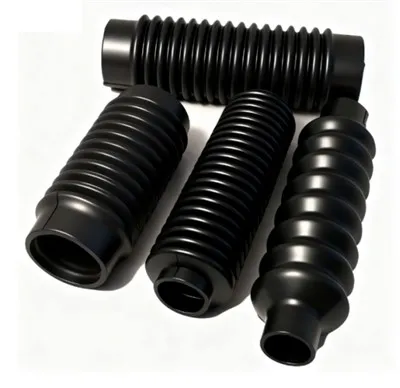
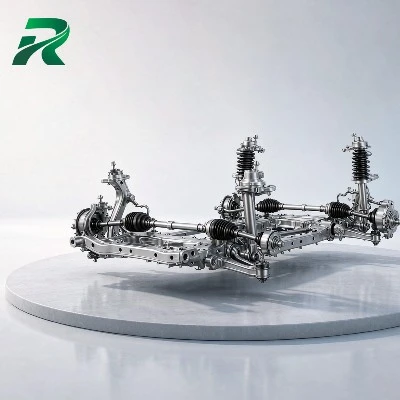
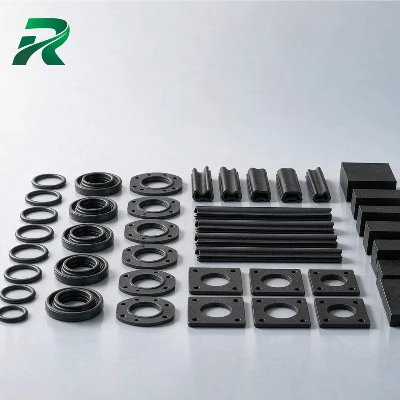
If you start hearing unsettling "clunking" noises from the chassis, feel excessive looseness when going over speed bumps, or notice that steering feels less stable at high speeds, the culprit is often aged or damaged rubber bushings hidden within the suspension and control arms. As the core cushioning components at various chassis connection points, the condition of these bushings directly dictates your driving experience and safety.
Products Description
The Core Role of Rubber Bushings: The Silent Guardians
Rubber bushings are installed at metal connection points, such as on suspension links, control arms, and stabilizer bars. Their essential missions are:
Cushioning and Vibration Damping: To absorb bumps and vibrations from the road, ensuring ride comfort.
Providing a Flexible Connection: To allow controlled movement of connected parts while maintaining structural integrity, absorbing impacts.
Noise Reduction: To prevent direct metal-to-metal contact and friction, thereby reducing chassis noise.

When Should They Be Replaced? Identify These 5 Warning Signs?
Made of rubber, bushings are inevitably subject to aging, cracking, or deformation due to constant stress, temperature changes, and environmental exposure. Consider inspection and replacement if you notice any of the following:
Audible Chassis Noises: Hear "creaking," "clunking," or "dull thudding" sounds from underneath when driving over uneven surfaces or speed bumps. This often signals metal parts colliding due to gaps created by failed bushings.
Noticeable Deterioration in Handling: Experience increased steering play, a vague or unusually floaty feeling at highway speeds, or excessive body roll during corners.
Abnormal Tire Wear: Severely worn bushings (especially control arm bushings) can misalign wheels, leading to irregular tire wear, often on the inner or outer edges.
General Chassis Looseness and Increased Vibration: The chassis feels less "tight," with more minor vibrations transmitted into the cabin, and the body exhibits excess movement after bumps.
Visible Damage Upon Inspection: When the vehicle is lifted, inspect the bushings. Look for severe cracking, splitting, permanent deformation, separation from the metal sleeve, or oil-soaked swelling (for hydraulic bushings). These are clear signs for replacement.
General Advice: Even without obvious symptoms, consider inspecting bushings as part of major maintenance for high-mileage vehicles (e.g., over 80,000 - 100,000 miles) or those frequently driven on rough roads.

Is It Safe to Drive with Bad Bushings? Risk Analysis and Urgent Advice?This requires careful consideration.
Short-Term, Low-Speed Movement Only: In very limited scenarios (e.g., moving the car slowly to the nearest repair shop), it might be temporarily manageable. You must maintain low speeds and avoid any aggressive maneuvers.
Absolutely Avoid Long-Term or Normal Driving:
Dramatically Increased Risk of Loss of Control: Worn bushings critically affect wheel alignment and suspension geometry, potentially causing abnormal vehicle dynamics during emergency maneuvers or high-speed driving.
Risk of Chain-Reaction Damage: Failure at one point transfers abnormal stress to adjacent components (like suspension links, ball joints, or even the subframe), leading to secondary, more expensive damage.
Compromised Safety Systems: They significantly impair braking stability and steering precision, which may hinder effective evasive action in critical moments.
Our clear recommendation is: If you suspect or confirm rubber bushing failure, immediately avoid long-distance or high-speed driving and schedule professional inspection and replacement promptly. Do not risk personal and road safety for the sake of minor delays or savings.

Choosing Quality Replacements: The Example of OE Code 8-97063-517-8
When replacement is necessary, choosing high-quality parts that match original specifications is crucial. Taking the high-precision bushing corresponding to OE code 8-97063-517-8 as an example, a qualified replacement should feature:
Precise Fitment: Dimensions, hardness, and mounting points must exactly match the original design to restore proper chassis settings.
Durable Material: Made from high-quality rubber compounds with excellent resistance to aging, tearing, and oil/contaminants for extended service life.
Quality Construction: Robust metal inner and outer sleeves firmly bonded to the rubber to prevent separation or deformation under stress.
Replacing bushings is a job requiring specialized tools (like a press) and expertise. We strongly recommend having it performed by a professional repair shop to ensure correct installation, followed by the necessary wheel alignment.
In Summary: Rubber bushings are the "barometer" of your chassis's health. Address them promptly when noises, looseness, or handling issues arise. For your safety and your vehicle's, never postpone replacing confirmed faulty bushings. Opting for reliable parts like those matching 8-97063-517-8 and relying on professional installation is the fundamental way to restore your car's original driving feel and safety performance.
Our address
3001 Maoye Building,Haihe East Road, Hebei District, Tianjin,China
zipcode300140
Phone Number
+86 189 2034 6230
administrator@rubberproduct.net