Treatment Solutions

Product Introduction
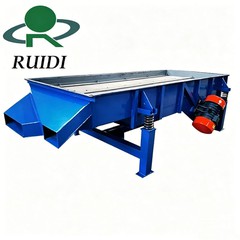
On powder screening production lines, screen clogging and frequent production halts have long been a major headache for operators. Three-dimensional rotary vibrating screens are widely adopted by chemical, lithium battery, herbal medicine and building material manufacturers worldwide for material grading, yet screen blockages of varying severity remain commonplace. Issues including fine powder plastering mesh holes, irregular particle jamming and powder buildup caused by static electricity occur daily. Industry surveys indicate such widespread clogging cannot be attributed to material properties alone. It stems from several prevailing industry challenges: improper equipment selection across the sector, stripped-down standard machine configurations, inadequate on-site operation and maintenance, and skipped pre-processing procedures. This bottleneck seriously limits consistent full-capacity operation of powder production lines.
Reasons of clogging of screen
Properties of the material
Fine powders adhere readily to mesh holes. Damp, oily, or gum-like materials form a coating on screens. Slender, flaky or needle-shaped particles become lodged in apertures. The small powders are attracted to the screen wires due to static cling and the particles with sizes close to the openings of the mesh are stuck in the holes permanently.
01
Wrong choice and design of equipment
Usually, the factories use normal vibrating screens without any modification like anti-clogging bounce balls or ultrasonic clearing units. The undersized machines are overloaded with excess feed, which leads to thick compaction of material on the surface of the screen. Also, blockages are often caused by unsuitable mesh sizes. Many budget models have cut back on anti-clogging accessories in order to bring down the prices.
02
Incorrect operation and lack of daily maintenance
Operators seldom change vibration amplitudes and hammer angles to enhance particle bouncing. Loose, sagging screens readily catch materials. Worn or missing bouncing balls fail to shake off stuck particles. Operators often neglect to clean the screens regularly and ignore damaged sealing strips, allowing powder to accumulate between the screen and frame.
03
Incomplete pre-treatment processes
To save energy and time, many manufacturers omit drying, breaking up agglomerates or static elimination before screening. Raw materials with high moisture, clumps or static add to the screening pressure, resulting in constant clogging.
04


Solutions to Screen Clogging
pretreatment of raw materials
Dry wet or oily substances to minimize adhesion. Break up pre-agglomerated lumps. For plastic powders, resin powders and lithium battery powders, install static eliminators to reduce electrostatic adsorption. Separate oversize needle-like and flaky fragments before feeding to prevent particle wedging.
Match screening equipment and anti-block accessories
Choose custom rotary vibrating screens instead of standard off-the-shelf models. For the grading of fine powders, the sieve frame can be equipped with bouncing rubber balls, cleaning rings or ultrasonic deblinding systems. Use the correct match mesh aperture and leave a reasonable sized gap to prevent critical sized particles jamming holes. Do not overload small screening machines with high output requirements.
Reasonably adjust vibration parameters
Adjust the angle of the upper and lower eccentric weights, so that the jumping height of the material on the screen surface is increased and the stuck particles fall off smoothly. Vibration amplitude should be set according to the material characteristics: small amplitude and high frequency for ultrafine powder, large amplitude for irregular granular materials. Use buffer feeders to distribute feed evenly to prevent thick layers of compacted material.
Standardize installation and daily maintenance
Stretch the screens tight to remove any sagging that allows material to build up. Regularly replace aged, deformed bouncing balls and damaged sealing strips. Schedule regular mesh cleaning during production breaks. Train operators on standardized adjustment and inspection procedures to identify hidden clogging hazards early.
Contact Us
Tianjin Ruidi International Trade Co., Ltd
Langfang Ruidi New Materials Technology Co., Ltd.
TEL: +86 189 2034 6230
TEL:+86 189 0205 0338
TEL:+86 18020018286
Email: admin@rubberproduct.net
Address: Room 3001, Maoye Building, No. 78 Haihe East Road, Hebei District, Tianjin, China