


Global Industrial Rubber Product Supply Chain Changes: What Metrics Do Overseas Buyers Focus On
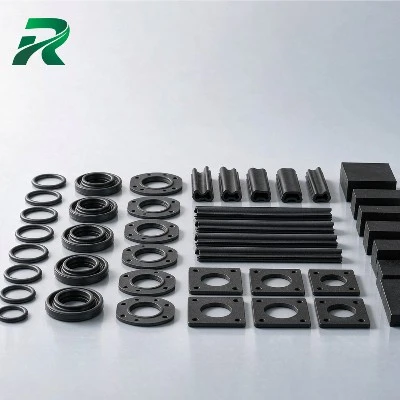
The global industrial rubber industry is in the middle of a profound, long-term supply chain transformation. Over the past decade, international procurement teams for rubber seals, molded gaskets, extruded profiles, custom rubber components and engineered elastomer parts operated under a relatively simple framework. Most sourcing decisions centered on three core factors: unit price, basic material suitability and stated production lead time. As long as a rubber part could meet the minimum hardness and temperature requirements and ship within an acceptable window, suppliers stood a strong chance of winning orders.
Today, that model is no longer sufficient. Volatile pricing of natural rubber and synthetic elastomers such as NBR, EPDM, HNBR and FKM, shifting international trade rules, tighter chemical restriction policies, recurring logistics disruptions and rising corporate ESG obligations have completely reshaped buyer expectations. Overseas buyers across oil and gas, water treatment, automotive, heavy machinery, construction and general industrial sectors are no longer chasing the lowest price. They are building structured supplier scorecards filled with measurable, auditable metrics. The goal is straightforward: reduce supply interruption risks, avoid costly non-compliance penalties, cut field failure rates and align purchases with internal sustainability targets. For rubber manufacturers aiming to capture stable long-term export business, understanding these evaluation dimensions is essential.

1. Material Consistency and Repeatable Physical Performance
Material performance consistency remains the foundational requirement, and it is still the first set of metrics buyers examine. Unlike many general commodities, custom rubber products rely heavily on precise compound formulation. A tiny, undocumented adjustment to the recipe can drastically change how a seal behaves under pressure, heat, oil or chemical exposure. For safety-critical applications, inconsistent rubber batches can trigger equipment leakage, premature cracking, unplanned downtime and expensive warranty claims.
Overseas buyers now expect every batch to come with verifiable test data aligned with widely accepted standards including ASTM D2000, ASTM D1418 and relevant ISO specifications. The key performance indicators they routinely review include:
- Hardness control within tight Shore A tolerance ranges
- Tensile strength, ultimate elongation and tear resistance
- Compression set, a decisive metric for long-term sealing performance
- Heat aging resistance, ozone resistance and UV weathering performance
- Fluid compatibility with mineral oil, fuel, water, acids and alkalis
- Low-temperature flexibility for cold-climate installations
Buyers are increasingly wary of suppliers who tweak formulations without formal change notifications to cut raw material costs. Many large OEMs require pre-approval for any compound modification and mandate cross-comparison testing between old and new recipes before implementation. For high-performance elastomers like HNBR and FKM, buyers will also check long-term thermal stability and resistance to aggressive media that standard NBR or EPDM cannot withstand.
2. Regulatory Compliance and Valid, Up-to-Date Certifications
Compliance has evolved from an optional bonus into a hard entry threshold. For shipments heading to the European Union, the United Kingdom, North America and other developed markets, incomplete, expired or inaccurate compliance paperwork can hold cargo at ports, result in fines, or lead to permanent supplier disqualification. Procurement teams often screen suppliers by compliance documents before they even request commercial quotations.
The core compliance documents and certifications regularly audited include:
REACH registration, SVHC declarations and RoHS statements
PAH, PFAS and other restricted substance declarations, which have grown stricter in recent years
SDS / MSDS sheets prepared separately for each unique rubber compound
ISO 9001 certification for general quality management systems
IATF 16949 for rubber components supplied to the automotive industry
Sector-specific approvals: DVGW for drinking water contact, FDA for food-grade rubber, UL flammability ratings
PPAP documentation for serial production parts for large OEM projects
Natural rubber suppliers face an extra layer of compliance pressure from the EU Deforestation-free Products Regulation (EUDR). Many European buyers now demand documentary evidence tracing natural latex back to its source plantation to prove the raw material is not linked to deforestation or illegal land use. This rule has had a notable impact on natural rubber sourcing routes and pushed many buyers to deepen audits upstream beyond the rubber factory itself.
3. Full-Lifecycle Product Traceability
Traceability is one of the fastest-growing priorities in the new rubber supply chain. In the past, most buyers only cared about the finished goods; today, they want to trace a single gasket or seal all the way back to raw material lots, mixing records, molding production logs, post-curing procedures and third-party lab reports. This capability is especially valuable for safety-critical sealing parts used in pipelines, hydraulic systems and industrial equipment.
Standard traceability expectations from overseas buyers cover:
Permanent batch coding on finished goods, packaging and packing lists
Complete raw material incoming inspection records for natural rubber, synthetic polymers, carbon black, plasticizers and curing agents
Documented process change control records for mold adjustments, compound updates and production parameter changes
Access to digital production records for remote third-party audits
Clear isolation procedures for non-conforming batches to prevent mixed shipments
When quality issues emerge, robust traceability allows buyers to carry out targeted containment and root-cause analysis instead of launching broad, expensive product recalls. Buyers will often ask suppliers to describe their traceability system during factory audits, and some customers even require cloud-based platforms to retrieve batch certificates at any time.
4. Delivery Reliability and Supply Chain Resilience
After years of container shortages, port congestion, freight cost spikes and raw material supply shocks, overseas buyers separate quoted lead time from proven delivery reliability. A supplier with a short lead time but inconsistent shipment performance is considered a high-risk partner. Procurement managers build resilience metrics into vendor evaluation to protect their own production schedules.
Key resilience and delivery metrics buyers track:
- On-time delivery rate (OTD) over the most recent 6–12 months
- Finished goods safety stock for standard rubber items such as common gaskets and O-rings
- Strategic raw material inventory for popular elastomer grades including EPDM, NBR and HNBR
- Available spare production capacity to absorb sudden order surges
- Clear contingency plans for raw material shortages, equipment breakdowns and logistics delays
- Transparent rules for price adjustments tied to natural rubber and crude oil market fluctuations
Buyers tend to favor manufacturers with integrated in-house resources: internal compound mixing workshops, self-owned mold-making capability and independent molding and extrusion lines. Pure trading companies that outsource every production step are viewed as less predictable, as they have limited control over production schedules and formulation stability.

5. Sustainability, Circular Economy and ESG Metrics
Sustainability has moved far beyond marketing wording and now appears directly on RFQ checklists. Multinational brands and industrial end-users are under pressure from regulators, investors and end customers to reduce their carbon footprint. They are actively shifting spending toward suppliers with measurable environmental performance.
Common ESG and circular rubber metrics buyers request:
Recycled rubber content percentage and valid GRS certification for recycled elastomer products
Production waste rate during mixing, trimming, deflashing and inspection processes
VOC emission controls during vulcanization and post-processing
Wastewater and solid waste treatment records
Carbon accounting data for specific rubber parts, where available
Ethical sourcing statements and labour practice audit reports
While recycled rubber cannot replace virgin high-performance elastomers for all demanding sealing applications, buyers increasingly welcome suppliers that can offer circular options for suitable, less critical projects. Factories with clear waste reduction programs and low-emission production setups gain a competitive edge, particularly with European buyers.

6. In-House Engineering Support and Closed-Loop Quality Management
For custom molded and extruded rubber parts, technical support capacity is another major differentiator. Many overseas buyers do not just need a factory to replicate drawings; they need a technical partner that can optimize designs for manufacturability, select the right elastomer grade and solve sealing failure problems.
Buyers assess technical capability through these practical indicators:
- In-house laboratory with regular performance testing capacity
- DFM (Design for Manufacturability) feedback at the prototype stage
- Precision tolerance control for complex custom molds
- Fast sample turnaround time for new development projects
- Formal corrective action systems such as 8D reports for quality non-conformities
- Technical support for material selection and failure analysis when seals fail in service
A supplier that can explain the trade-offs between different rubber materials, suggest design improvements and provide post-sales technical support creates far more long-term value than a manufacturer competing only on low prices. This technical partnership is the foundation of repeat OEM business.
Closing Thoughts
The restructuring of the global industrial rubber supply chain is not a temporary trend. Higher raw material volatility, stricter chemical and environmental regulations, and growing demand for supply stability will continue to set higher standards for elastomer manufacturers. Price will always remain a factor in sourcing decisions, but modern overseas buyers weigh stable material performance, audit-ready compliance, full traceability, consistent delivery and sustainable production as core decision-making metrics.
Rubber manufacturers who embed these metrics into their quotation systems, production workflows and customer documentation will build stronger trust with international buyers and stand out amid fierce global competition. Transparent data, consistent quality and proactive communication are becoming the new standard for winning and retaining overseas rubber sourcing orders.
If you are sourcing custom rubber seals, gaskets, extruded profiles or molded rubber components and require stable material performance, full compliance documentation and reliable long-term supply, our engineering team is ready to review your specifications and support your project.


