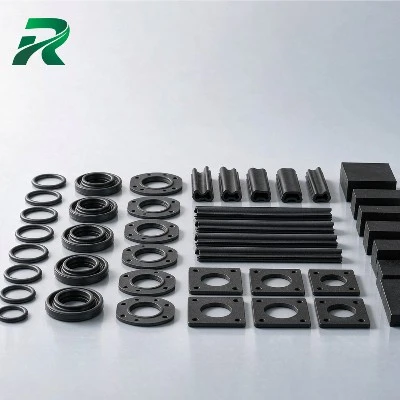
As an original custom rubber manufacturer with years of production experience, we have supported hundreds of engineering and procurement teams across different industries, including machinery, automotive, hydraulic systems, electrical equipment and construction. We've seen countless projects run into costly trouble simply because of improper rubber part selection at the specification stage. Rubber seals, vibration dampers, anti-slip pads, rubber bumpers and custom molded rubber components may look simple from appearance. However, a wrong material or formula choice can lead to fluid and gas leakage, unexpected equipment shutdown, batch rework, delayed delivery, customer complaints and even potential safety hazards. Many buyers and engineers form their selection logic only based on past experience, old samples or direct price comparison, which easily leads to hidden failures that only surface after installation.
Below are the five most common selection mistakes we repeatedly observe in industrial procurement. Reading through this guide will help you avoid premature rubber failure, extend component service life, reduce unplanned downtime and cut overall operating costs for your equipment.

Mistake 1: Only focus on rubber polymer type, ignoring formulation differences
Many buyers follow a simplified rule of thumb when choosing rubber materials: pick NBR for oil resistance, silicone for high-temperature environments and EPDM for outdoor weathering applications. This general classification is helpful as a starting point, but it cannot replace professional material matching. The same rubber polymer can be formulated in dozens of different ways with totally different performance outputs.
Take NBR nitrile rubber as an example. Different acrylonitrile content, plasticizer types, filler loading and curing systems bring huge differences in oil resistance, low-temperature flexibility, abrasion resistance and compression set. For FKM fluoroelastomer, which is widely used for harsh chemical and high-temperature working conditions, different grades and custom formulas vary greatly in chemical compatibility, acid and alkali resistance, and continuous temperature tolerance.
If buyers only specify the material name such as "NBR" or "EPDM" without sharing full working condition details, many suppliers will directly use generic low-cost formulas to match the order. The finished rubber parts may look qualified at first sight, but they will swell, harden, lose elasticity or crack after a short period of service once contacting target media.
✅ Correct practice: Do not state only the rubber grade name. Fully share the contact media (oil, water, coolant, solvent, ozone etc.), continuous working temperature, working pressure and static/dynamic service conditions. Let the factory technical team match the right formulation and run compatibility immersion tests when necessary, especially for new and complex working scenarios.
Mistake 2: Only check Shore hardness while overlooking compression set
Shore A hardness is usually the first parameter buyers ask for when sourcing rubber parts. It is an easy indicator to test and communicate, but hardness alone cannot guarantee reliable long-term sealing or damping performance.
Especially for sealing products, compression set is the core index that determines whether the rubber can rebound and maintain stable sealing performance over time. Even if the hardness fully meets your requirement, poor compression set means the rubber cannot recover its original shape after long-time compression. It will gradually lose contact pressure and eventually cause leakage. For anti-vibration rubber mounts and damping pads, high compression set will lead to permanent flattening deformation and weakened vibration isolation effect.
A common misunderstanding is that harder rubber lasts longer, while softer rubber always provides better sealing. This is not true. Hardness must match groove design, squeeze rate and working pressure, together with a carefully tuned low-compression-set compound. A medium-hard rubber with excellent compression set often outperforms harder grades for static sealing.
✅ Correct practice: Prioritize compression set indicators for static seals. Select low-compression-set formulations instead of adjusting hardness blindly just based on habit. Always ask suppliers to provide compression set test reports under the actual temperature and time matching your application.
Mistake 3: Select materials based on peak temperature instead of continuous working temperature
Many buyers choose rubber grades according to the instant peak temperature marked on equipment datasheets. This is one of the most frequent and destructive mistakes in rubber material selection.
Rubber temperature ratings clearly distinguish short-term peak temperature and long-term continuous service temperature. Rubber can survive brief heat spikes for minutes or hours without obvious damage, but continuous exposure near its temperature limit triggers slow thermal aging. The rubber polymer chain will degrade gradually, making the material stiff, brittle and less elastic. Thermal cycling, alternating hot and cold conditions, will speed up aging and crack formation even further.
One easily overlooked factor is frictional heat. For dynamic reciprocating seals, rotary shaft seals and rubber parts under continuous rubbing, the actual surface temperature of the rubber is much higher than the equipment nominal temperature. The extra heat generated by friction can accelerate aging far faster than expected.
✅ Correct practice: Base your material selection on continuous working temperature and leave a reasonable safety margin. Add extra temperature allowance for friction-induced heat buildup on dynamic rubber surfaces. If thermal cycling exists, choose rubber grades with good heat aging resistance.
Mistake 4: Prioritize unit price without calculating full-lifecycle cost
Cost control is essential for every procurement team, but rubber products carry obvious low-price traps that are hard to spot in initial sampling.
Low-cost rubber compounds are usually filled with excessive cheap extenders, mineral fillers or reclaimed rubber. Parts made from these formulas may look identical to premium rubber at first glance and pass simple short-term room-temperature tests. Yet they age fast, have poor chemical resistance and low tear strength, and can fail within weeks after installation. Saving a small amount on unit price will result in frequent component replacement, unexpected machine damage, production stops and customer claim losses, pushing up your total ownership cost sharply.
Another widespread risk is inconsistent quality between samples and mass production. Some manufacturers make approval samples with high-quality virgin rubber compounds to pass testing, while switching to cheaper formulas once formal mass production starts. Without locked material specifications, you will face unstable batch quality.
✅ Correct practice: Verify material certificates, physical property reports and batch consistency before confirming orders. Evaluate service life, downtime risk and maintenance frequency, rather than comparing unit quotes only. You can lock the rubber formulation and require pre-shipment lab testing for each batch for critical applications.
Mistake 5: Apply static rubber parameters directly to dynamic working conditions
A rubber part designed for static compression sealing performs completely differently from one used for reciprocating motion, rotary friction or continuous alternating vibration. The design targets and required material properties are not interchangeable.
Static sealing mainly focuses on compression set and media resistance. Dynamic applications require extra critical properties: abrasion resistance, high tear strength, low friction coefficient and excellent fatigue resistance. Using static sealing compound on rotary shaft seals will cause rapid surface wear, particle shedding and oil leakage in a short run. For vibration isolators under continuous alternating load, fatigue resistance matters far more than hardness.
Many engineering drawings only show dimensions and tolerances without marking whether the part works under static or dynamic service. If the supplier does not confirm working conditions, they will produce with general static compounds by default, leading to premature failure right after installation.
✅ Correct practice: Clearly inform your supplier whether the rubber component works for static sealing, reciprocating motion, rotary friction or vibration damping. Let engineers select compounds and adjust surface finish accordingly for dynamic use.
Wrap-up
Based on our production data and after-sales feedback, around 80% of rubber component failures are not caused by manufacturing defects such as bubbles, incomplete filling or surface flaws, but mismatched material selection at the early specification stage.
Proper rubber selection is more than simply picking a polymer type and a Shore hardness value. It requires full systematic consideration of contact media, temperature range, working pressure, static or dynamic load, squeeze rate, required service life and compliance certifications such as RoHS, REACH, FDA or other industry standards. Even small changes of working conditions may require formula adjustment.
If you are unsure about your existing specification, or you have experienced unexplained rubber failure before, feel free to send us your detailed working conditions, engineering drawings or failed samples. Our in-house engineering team from the rubber factory can review your selection and optimize the rubber compound for free, helping you avoid costly procurement mistakes and achieve stable, long-term performance of your rubber parts.
FAQ
Q: Why do rubber parts pass sample testing but fail quickly in mass production?
A: It is very likely that the rubber compound used for approval samples differs from the mass production formula. Another common reason is that you only ran short room-temperature tests, without simulating long-term high-temperature aging or media immersion tests matching your real working environment. For critical orders, lock the formula in writing and require physical testing reports for each production batch.
Q: Why are some NBR parts oil-resistant while others are not?
A: The oil resistance performance of NBR depends heavily on acrylonitrile content. Higher acrylonitrile delivers better oil resistance yet poorer low-temperature flexibility. Besides, additives, vulcanization curing systems and filler content also affect chemical resistance significantly. Never judge performance merely by the material name "NBR".