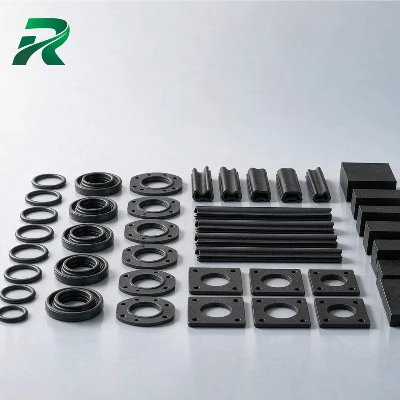
In industrial applications (such as HVAC systems, pipe supports, sealing, and vibration damping), the failure of rubber components is often not due to "poor material quality," but rather a lack of verification of critical performance characteristics.
If you are procuring rubber seals, damping pads, or pipe clamp liners, understanding core testing methods can directly reduce rework rates and long-term costs.


Why do rubber tests determine product reliability?
Rubber is subjected to the following over long periods in real-world applications:
Continuous compression (sealing scenarios)
High-frequency vibration (equipment operation)
High-temperature/low-temperature cycling
Corrosion from oil and chemical media

Without targeted testing, even if initial performance is good, aging, cracking, or loss of sealing will occur within 3–6 months.
7 Key Rubber Testing Methods
Shore A Hardness Test: The Basic Gauge for Hardness & Softness Matching
Hardness is the most intuitive performance indicator of rubber, measured against the Shore A standard. Values below 50A lead to easy deformation and insufficient support; values above 70A result in poor sealing fit and ineffective shock absorption. For HVAC system sealing and shock absorption components, the optimal range is 50–70 Shore A, balancing sealing tightness and elastic cushioning for mainstream applications such as pipe connections and fan vibration isolation.
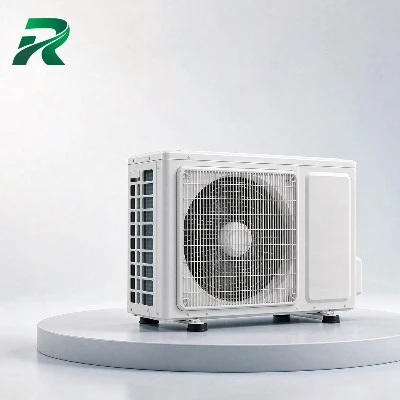
Langfang Ruidi Case: When undertaking the customized production of rubber shock-absorbing feet for a well-known air-conditioning brand (one of Langfang Ruidi's long-term cooperative customers including Oaks Air Conditioning and LG Electronics), we strictly controlled the Shore A hardness of the products within the range of 55–65A through pre-production hardness testing. This not only ensures the shock absorption effect of the air-conditioning outdoor unit but also avoids equipment noise caused by excessive hardness or component damage caused by insufficient support. Up to now, the batch of products has been put into use for 3 years, with a failure rate of less than 0.1%.
Tensile Strength & Elongation at Break: Guarantees for Tensile & Impact Resistance
This test evaluates rubber's core ability to resist tension and fracture. High tensile strength prevents tearing under stress, making it suitable for pressure-bearing parts like pipe clamps and dynamic connectors. High elongation at break delivers excellent toughness to withstand impact, vibration, and deformation. Industrial-grade rubber typically requires tensile strength ≥ 10 MPa and elongation ≥ 300% to meet dynamic operating demands.
Langfang Ruidi Case: For the rubber pipe clamps customized for the automotive industry, Langfang Ruidi conducted strict tensile strength and elongation at break tests. The final products achieved a tensile strength of 12.5 MPa and an elongation at break of 380%, far exceeding the industry standard. These pipe clamps are used in the connection of automotive engine pipelines, effectively resisting the tension and vibration generated during vehicle operation. They have been recognized by well-known automotive brands such as Great Wall Motors and have been mass-produced and supplied continuously.
Compression Set: The "Golden Indicator" of Sealing Durability
As the most critical test for seals, compression set measures rubber's elastic recovery after long-term compression. Lower values mean stronger resilience and longer sealing life; values exceeding 30% carry high risks of seal failure, air leakage, and water leakage. Strict control of this parameter is mandatory for applications including HVAC pipe seals, wall hole sealants, and rubber gaskets - it directly determines how long a product remains effective.
Langfang Ruidi Case: In the production of air-conditioning pipe seals for a large HVAC project, Langfang Ruidi took compression set as the core control indicator, strictly controlling the value below 20% through formula optimization and process adjustment. After 1,000 hours of long-term compression testing, the seals still maintained excellent rebound performance, without air leakage or water leakage. This project has been in stable operation for 5 years, and the sealing performance of the rubber seals has not degraded, fully verifying the durability advantage of our products. This achievement is also supported by our independent research and development technology, such as the invention patent of "low-temperature and low-compression-set neoprene plug".
Heat Aging Test: Verification of Stability in High-Temperature Environments
This test simulates long-term high-temperature conditions (e.g., 125℃ × 70h) to evaluate changes in hardness, tensile properties, and surface conditions after aging. HVAC and thermal equipment operate under continuous high-temperature cycles; heat aging that causes sharp increases in hardness, drops in strength, or surface cracking will directly lead to seal failure. Premium materials such as EPDM maintain high performance retention after testing and are ideal for high-temperature environments.
Langfang Ruidi Case: When developing high-temperature-resistant rubber gaskets for thermal energy equipment, Langfang Ruidi conducted a 125℃ × 70h heat aging test. The tested gaskets (made of EPDM material) had a hardness change rate of less than 8% and a tensile strength retention rate of more than 90%, without surface cracks. These gaskets are currently used in the heat exchange system of a large thermal power plant, operating stably in a high-temperature environment for a long time. Our independent research and development of "high-temperature flame-retardant air-conditioning damping" also provides strong technical support for the heat resistance of products.
Ozone Aging Test: Critical Protection Against Outdoor Cracking
Designed for outdoor units and exposed piping, this test accelerates aging in a simulated ozone environment. Rubber exposed outdoors is prone to ozone erosion, resulting in microcracks and premature failure. Ozone aging testing helps select ozone-resistant materials (e.g., EPDM), eliminating short service life and cracking in outdoor use and extending the lifespan of exposed components.
Langfang Ruidi Case: For the exposed pipe seals of outdoor air-conditioning units customized for LG Electronics, Langfang Ruidi conducted strict ozone aging testing. The products were placed in a simulated ozone environment (concentration 50pphm, temperature 40℃) for 72 hours, with no microcracks on the surface and no significant change in performance. These seals have been used in outdoor air-conditioning units in coastal areas for 4 years, effectively resisting ozone erosion and ensuring the service life of the equipment.
High & Low Temperature Resistance: Adaptation to Extreme Environments
This test verifies that rubber remains crack-free at low temperatures and non-softening at high temperatures. Extreme conditions impose strict requirements on materials, from frigid northern winters to hot southern summers and frequent temperature fluctuations during equipment startup and shutdown. EPDM performs exceptionally well, with a wide service temperature range of -40℃ to +120℃, retaining elasticity at low temperatures and resisting deformation at high temperatures, making it the top choice for the HVAC industry.
Langfang Ruidi Case: Aiming at the harsh climate conditions in northern China, Langfang Ruidi developed rubber shock absorbers for outdoor pipelines, which passed the high and low temperature resistance test. The products remained elastic without brittle fracture at -40℃ and did not soften or flow at +120℃. These shock absorbers are currently used in the outdoor pipeline system of a northern oilfield, adapting to the extreme temperature difference of -40℃ to +35℃ in the region, and have been in stable operation for 2 years. Our "air energy shock-absorbing feet" product also has excellent low-temperature resistance, which has been widely used in northern HVAC projects.
Oil & Chemical Corrosion Resistance: Stability Test for Industrial Conditions
Aimed at industrial pipelines, compressors, and lubricating oil systems, this test assesses rubber stability in oils and chemical media. Materials with poor oil resistance easily swell, soften, and lose strength, causing leaks and malfunctions. Nitrile rubber (NBR), hydrogenated nitrile rubber (HNBR), and similar materials show volume change ≤ 10% and high performance retention after oil testing, adapting to complex industrial media environments.
Langfang Ruidi Case: For the rubber seals used in compressor systems of a chemical enterprise, Langfang Ruidi selected HNBR material and conducted oil resistance testing. After soaking in lubricating oil at 80℃ for 24 hours, the volume change of the seals was only 6.2%, and the tensile strength retention rate was 92%, fully meeting the requirements of the chemical industry. These seals have solved the problem of frequent seal failure in the customer's compressor system, reducing the maintenance cost by 30% for the customer. As an enterprise with import and export qualifications, we also provide such high-performance oil-resistant rubber products for overseas customers.
How to determine if a supplier is reliable?
When purchasing, it's recommended to directly ask:
Do they provide a compression set test report?
Do they have aging test data (≥72 hours)?
Do they support material customization (EPDM / NBR / Silicone)?
Do they have real-world application case studies (HVAC / industrial projects)?

Contact
3001 Maoye Building,Haihe East Road, Hebei District, Tianjin
zipcode300140
+86 189 2034 6230
administrator@rubberproduct.net