

Industry Background & Product Value
As food, pharmaceutical, fine chemical, and new energy industries scale up, demand rises for higher classification accuracy, product integrity, continuous output, and dust-free, low-noise operations. Powder screening directly impacts yield, uptime, and long-term costs. Traditional high-frequency vibrating screens fall short with ultra-fine, friable, or high-capacity applications.
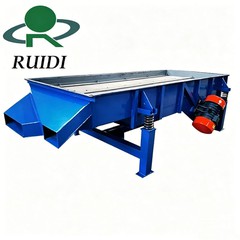
The Circular Tumbler Screener, featuring a unique compound motion of 3D gyratory and planar swing, simulates gentle manual sieving. It delivers five core values: high capacity, superior accuracy, low breakage, extended screen life, and anti-blinding systems. This guide addresses common buyer concerns, analyzes root causes, and offers practical solutions – a complete reference for global purchasers.
Buyer Common Questions
1. Q: Why does screening accuracy vary among Circular Tumbler Screeners from different manufacturers?
A: Poorly designed eccentric shafts and unbalanced counterweights cause uneven distribution and edge channeling – particles discharge without full screen contact. Inadequate screen tension creates dead zones, and overfeeding prevents fine particles from passing through. Quality models optimize swing
trajectory for uniform distribution, delivering stable accuracy of 95%–99%.
2. Q: How to prevent frequent screen blinding when screening ultra-fine electrostatic or sticky materials?
A: Ultra-fine powders above 300 mesh agglomerate due to static electricity, while sticky particles easily lodge in apertures. Basic models with only rubber balls cannot cope. Selecting from three optional systems – rubber balls, rotary brush, and ultrasonic – ensures 24/7 blockage-free production.
3. Q: Why are breakage rates high when screening friable materials like sugar and resin pellets?
A: Low-end models have unbalanced amplitude adjustment and excessive drive clearance, causing excessive impact. Some manufacturers confuse vibrating screen and tumbler screener structures. Proper models use a gear motor and eccentric shaft for low-speed operation with no high-frequency impact, keeping breakage below 1% and preserving particle integrity.
4. Q: What are the long-term maintenance costs? How often does the screen mesh need replacing?
A: With no high-frequency impact, acceleration is only about 1/4.5 that of vibrating screens. Screen mesh life extends by 3–5 times, and rubber dampers age significantly slower. Regular inspection is all that's needed, reducing overall maintenance costs by over 60%.


Our Circular Tumbler Screener: Core Solutions & Selling Points
Compound Swing Motion – 95%–99% Classification Accuracy
Driven by a gear motor and eccentric shaft, the Circular Tumbler Screener combines 3D gyratory motion with planar oscillating swing. Material travels evenly across the entire screen surface without edge channeling or dead zones. Precision tensioning ensures a consistently flat screening surface. Supports 1–5 decks, separating up to 6 particle sizes in a single pass.
Low-Speed Gentle Screening – Breakage Rate Below 1%
Unlike vibrating motors with high-frequency impact, the Circular Tumbler Screener simulates gentle manual sieving with a low-speed tumbling action. Operating amplitude of 5–8 mm ensures sugar, resin pellets, pharmaceutical granules, and crystalline materials undergo minimal impact, preserving particle integrity and reducing material loss.
Triple Anti-Blinding Systems – Uninterrupted, Blockage-Free Operation
Three optional cleaning systems – rubber bouncing balls, rotary brush, and ultrasonic cleaning – can be selected based on material characteristics. For 500-mesh ultra-fine powders, high-moisture sticky materials, and electrostatic agglomerating powders, continuous cleaning eliminates frequent manual stoppages.
High Capacity, Durable Construction, Full Certifications – Long-Term Value
With no high-frequency fatigue wear, screen mesh lifespan is 3–5 times longer than vibrating screens. Material-contact parts are 304 stainless steel as standard, upgradeable to 316L. Certified to ISO9001, ROHS, and REACH, with optional explosion-proof motors. RUIDI800 through RUIDI2000 models handle 6–50 t/h, delivering 5–10 times the output of conventional screens at the same diameter. Fully enclosed dust-tight design, operating noise ≤75 dB, simple floor mounting – ready for production in just three steps.
Tianjin Ruidi International Trade Co., Ltd
Langfang Ruidi New Material Tecnology Co.,LTD
Our address
3001 Maoye Building, Haihe East Road, Hebei District, Tianjin 300140 P.R.China
Phone Number
+86 189 0205 0338
+86 189 2034 6230
topsales@rubberproduct.net administrator@rubberproduct.net
Inner Pursuit · Altruism Green· Resilience

Closing Remarks
In fine powder manufacturing, screen selection must look beyond price – evaluate accuracy, throughput, material loss, component life, line integration, and compliance. Our Circular Tumbler Screener resolves blinding, breakage, and capacity challenges across food, pharmaceutical, chemical, metallurgical, and new energy industries, with full certifications and flexible customization. Facing screening issues? Contact us for a tailored solution – better quality, higher efficiency, lower cost.