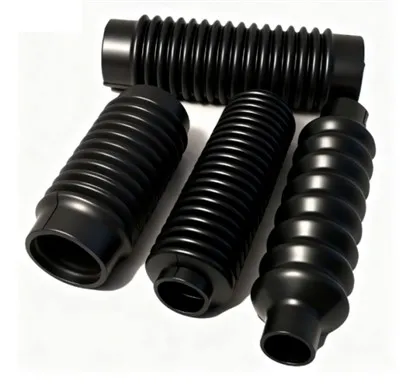
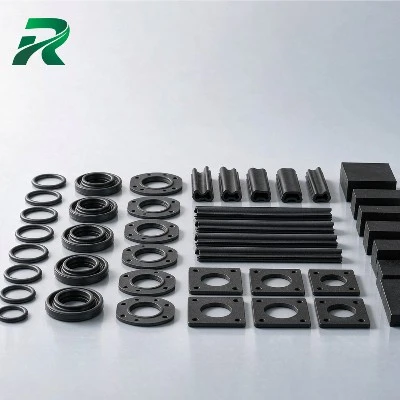
As a core component for vehicle safety, automotive rubber tires' quality is directly related to vehicle handling, ride comfort, and road safety. According to statistics, tire quality issues account for over 10% of traffic accidents worldwide each year, highlighting the critical importance of tire quality control. This article systematically explores quality control strategies for automotive rubber tires from four perspectives: materials science, production processes, testing technologies, and standardized management.
Raw Material Quality Control
The physical properties and durability of tires begin with the selection of raw materials. The ratio of natural rubber to synthetic rubber (such as styrene-butadiene rubber and butadiene rubber) must be precisely tailored to the tire's functional area. Tread rubber requires high abrasion resistance and wet skid resistance, typically using a high ratio of natural rubber and silica filler. Sidewall rubber emphasizes flexibility and is often based on butadiene rubber. The amount of additives such as carbon black and silane coupling agents directly affects the rubber's reinforcement and processing properties, requiring strict monitoring of impurity levels through infrared spectroscopy and thermogravimetric analysis. Leading international tire companies such as Michelin and Bridgestone have established supplier grading systems, implementing batch traceability for key indicators such as Mooney viscosity and tensile strength of rubber raw materials.
Refined Control of Production Processes
Modern tire manufacturing encompasses four core processes: mixing, calendering, molding, and vulcanization. Each step requires precise parameter control. During the mixing process, the temperature of the internal mixer (typically controlled at 140-160°C), the speed, and the order of adding materials directly affect the uniform dispersion of rubber and additives. An online viscometer is used to monitor the fluidity of the rubber compound in real time. The calendering process requires a bond strength between the cord ply and the rubber of ≥3.5 kN/m. X-rays are used to inspect the angle deviation of the cord alignment (with an allowable range of ±1°). During the molding stage, robotic arms precisely position each component to ensure that the geometric tolerance of the tire blank is within ±0.5 mm. The vulcanization process is crucial to determining the ultimate performance of a tire. Differentiated vulcanization curves must be set according to tire specifications (for example, a vulcanization time of approximately 20-30 minutes and a pressure of 1.8-2.5 MPa for passenger car tires). Distributed fiber optic sensors are also used to monitor temperature uniformity within the vulcanization chamber.
Application of Full-Process Testing Technology
Quality control requires a closed-loop verification system based on multi-dimensional testing methods. Among non-destructive testing technologies, ultrasonic testing can identify delamination defects as small as 0.5 mm within the tire carcass, while laser speckle interferometry (LSI) measures tread depth consistency (tolerance ±0.2 mm). Mechanical performance testing includes burst pressure under static load (≥3.5 times the standard load for passenger car tires) and dynamic high-speed endurance testing (tread wear ≤1.6 mm after 500 hours of continuous operation at 120 km/h). For chemical analysis, gas chromatography-mass spectrometry (GC-MS) is used to determine polycyclic aromatic hydrocarbons (PAHs) content, which must comply with EU REACH regulatory limits (≤10 mg/kg). In recent years, AI inspection systems based on machine vision have been applied to identify defects in finished tires, increasing the detection rate for issues like bubbles and missing adhesive to over 99.9%.
Establishing a Standardized Management System
International standard ISO 28580 and national regulations (such as the US DOT certification and China CCC certification) form the legal foundation for quality control. Companies must establish a full-lifecycle quality traceability system, from raw material receipt to finished product shipment, and utilize ERP and MES systems to enable real-time collection and analysis of production data. An international tire manufacturer demonstrated that by introducing Six Sigma management methods, they reduced tire dynamic balance unevenness from 12g to below 5g, resulting in a 42% decrease in customer complaints. Regularly conducting accelerated aging tests (continuous testing at 72°C for 168 hours to simulate a three-year operating cycle) and extreme road condition simulation tests (such as gravel impact tests) can effectively predict the long-term reliability of tires.
Quality control of automotive rubber tires is a systematic process integrating materials science, engineering technology, and management. Faced with new demands for low rolling resistance tires for new energy vehicles and highly responsive tires for autonomous driving, the industry must continuously optimize its quality control systems, ensuring fundamental safety while also moving toward intelligent and green tires. Only through rigorous control across the entire supply chain can we deliver on our commitment to quality: "Every tire carries the weight of life."